Mental Wellness
Acupuncture for Insomnia: Restful Sleep Without Medication
7 min read
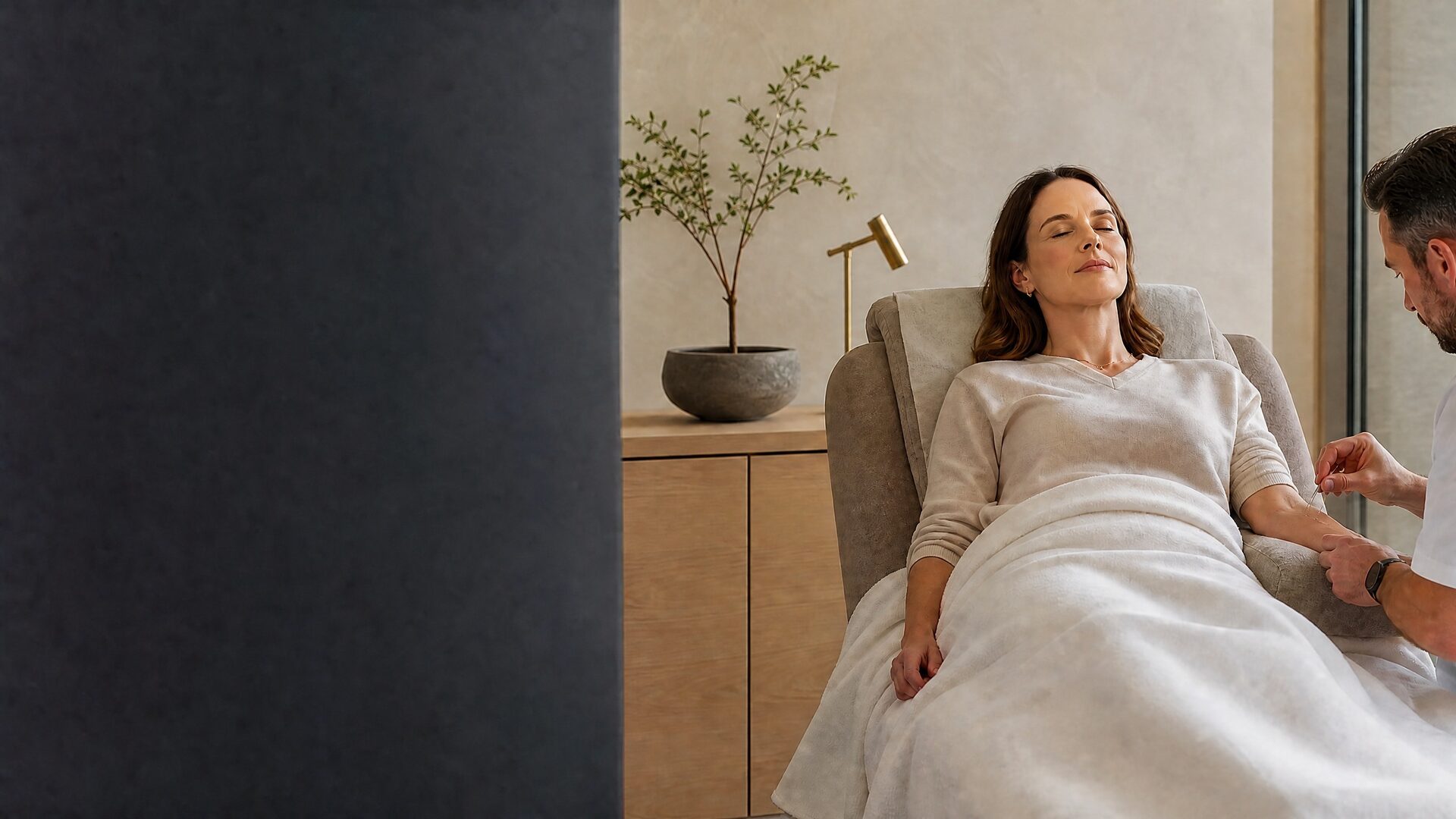
Anxiety is one of the most common conditions we treat at In Balance Acupuncture Clinic in Franklin, TN. Whether you experience generalized worry, panic attacks, social anxiety, or stress that disrupts your sleep and daily life — acupuncture offers a calming, drug-free path to relief that addresses the root cause rather than masking symptoms.
> "I came in stressed and anxious. The acupuncture treatments combined with the practitioners' guidance have been transformative. I feel like myself again!" — Jennifer K., Franklin TN patient
Your autonomic nervous system (ANS) regulates heart rate, breathing, digestion, blood pressure, and your stress response. It has two branches:
Anxiety is, at its physiological core, chronic sympathetic dominance — the fight or flight system stuck in the "on" position. Over time, this creates what clinicians call autonomic dysfunction — a dysregulation of the balance between sympathetic and parasympathetic tone. Signs include:
Acupuncture stimulates the vagus nerve — the primary nerve of the parasympathetic system, running from the brainstem through the heart, lungs, and gut. Vagal activation produces an immediate parasympathetic response: heart rate slows, breathing deepens, muscle tension releases, and the anxious mental state begins to dissolve. This is why most patients feel noticeably calmer within minutes of needle placement.
The hypothalamic-pituitary-adrenal (HPA) axis is the master stress hormone system. In chronic anxiety, the HPA axis becomes dysregulated — producing elevated cortisol at times when it should be low. Acupuncture has been shown to modulate HPA axis function, normalizing cortisol patterns and reducing the chronic stress hormone burden that drives anxiety.
Acupuncture stimulates the release of serotonin, dopamine, and GABA — the brain's primary inhibitory neurotransmitter that creates calm and prevents the firing of stress circuits. These are the same neurotransmitters targeted by anti-anxiety medications, but acupuncture supports your body's own production.
Chronic anxiety and autonomic dysfunction are both associated with elevated inflammatory markers. Acupuncture has documented anti-inflammatory effects — reducing pro-inflammatory cytokines and supporting immune regulation.
One of the most overlooked drivers of chronic anxiety is circadian disruption — and specifically, disrupted light signaling.
Your autonomic nervous system is deeply entrained to the 24-hour light-dark cycle through the suprachiasmatic nucleus (SCN) — the brain's master circadian clock, located in the hypothalamus. The SCN receives light information directly from specialized cells in the retina called intrinsically photosensitive retinal ganglion cells (ipRGCs), which contain a photopigment called melanopsin that is maximally sensitive to blue wavelengths of light.
When light signaling is disrupted, the ANS dysregulates — and chronic sympathetic dominance (anxiety) is one of the most common results.
Researchers and clinicians in the field of quantum biology and circadian medicine — including neurosurgeon Dr. Jack Kruse and quantum biology educator Carrie Bennett, MS — have emphasized that morning sunlight is not optional for nervous system health. It is the primary signal that sets the autonomic tone for the entire day.
Getting outside within the first 30-60 minutes of sunrise exposes the ipRGCs in your eyes to the specific light spectrum of early morning sun. This signal travels to the SCN, which then activates the HPA axis appropriately — generating a healthy cortisol awakening response that provides natural energy and mental clarity while setting up proper parasympathetic recovery for later in the day.
As Carrie Bennett has explained, morning sunlight kickstarts the HPA axis (cortisol), the HPT axis (thyroid hormone), and the HPG axis (reproductive hormones) — all through the eyes. Miss this morning light signal consistently and these pathways become dysregulated. Cortisol patterns flatten or shift. The sympathetic nervous system loses its daily reset. Anxiety becomes the default state.
Practical morning light protocol:
Blue light (in the 400-490 nanometer range) is the primary signal that tells the SCN it is midday. Modern LED screens and indoor lighting emit significant blue wavelengths at 9, 10, and 11pm — telling your nervous system it is noon when your body should be winding down.
As Dr. Jack Kruse has documented extensively, blue light after dark keeps the sympathetic nervous system activated when the parasympathetic system should be taking over. The result: anxiety that peaks in the evening, difficulty transitioning to sleep, and a nervous system that never fully recovers overnight.
Sources of evening blue light to manage:
Practical evening light protocol:
Most patients benefit from 1-2 sessions per week for the first 4-6 weeks. Anxiety often shows rapid improvement — many patients feel noticeably different after 2-3 sessions.
What Patients Experience
Q: Can acupuncture help with anxiety?
A: Yes — acupuncture is one of the most effective non-pharmaceutical treatments for anxiety. It works directly on the autonomic nervous system, shifting the balance from chronic sympathetic dominance toward parasympathetic recovery. Most patients notice a meaningful shift within their first few sessions.
Q: What is autonomic dysfunction and can acupuncture help?
A: Autonomic dysfunction refers to a dysregulation of the balance between the sympathetic and parasympathetic nervous systems — presenting as chronic anxiety, heart palpitations, digestive issues, insomnia, and temperature dysregulation. Acupuncture is one of the most effective tools for restoring autonomic balance by directly stimulating the vagus nerve and regulating the HPA axis.
Q: Can acupuncture help with panic attacks?
A: Yes. Regular acupuncture treatment reduces both the frequency and intensity of panic attacks by regulating the nervous system's tendency to shift into acute stress responses.
Q: How many sessions do I need for anxiety?
A: Most patients see meaningful improvement within 4-6 sessions. Some notice significant changes after 2-3 sessions.
Q: Should I also work on my light environment?
A: Yes — circadian light signaling is a foundational driver of autonomic nervous system balance. We provide specific guidance on morning light exposure and evening blue light management as part of a comprehensive approach to anxiety.
We treat anxiety and autonomic dysfunction patients from Franklin, Brentwood, Spring Hill, Thompson's Station, Columbia, Nashville, and Murfreesboro, TN.
Book an Anxiety Consultation — call us at (615) 260-6944 or book online.
---